Category: Books

  • Best New Chess Books

    Below is a list of  the best new chess books that have been published within the last year that would make a welcome addition to any chess player’s library.

    Positional Decision Making in Chess 

    Released in February 2016 Boris Gelfand’s Positional Decision Making in Chess shows examples from his games and those of his hero   Akiba Rubinstein presents his positional thought process during games.


    The Power of Pawns

    If you want to improve at chess, you must know the characteristics of typical pawn formations. Understanding the pawn structure is a key tool when you are evaluating a position on the board. One simple pawn move can ruin your position or win the game.Experienced chess teacher Grandmaster Jörg Hickl helps you to recognize the important characteristics of pawn structures in his book The Power of Pawns. Learn how you can and should develop your pieces, identify how you can improve your position and develop a plan of action.


    Mastering Chess Middlegames

    Translation of Grandmaster Alexander Panchenko (1953-2009) unique training methods.Mastering Chess Middlegames contains a collection of inspiring lessons on the most important middlegame topics: attack, defence, counterplay, realising the advantage, obstructing the plans of your opponent, the battle of the heavy pieces, and much more. In each chapter, Panchenko clearly identifies the various aspects of the topic, formulates easy-to-grasp rules, presents a large number of well-chosen examples and ends with a wealth of practical tests.
     

  • Steal Like a Grandmaster

    Steal Like a Grandmaster

    two_knights_o

    I have been reading the book Steal Like an Artist: 10 Things Nobody Told You About Being Creative by Austin Kleon, and I have found that many of his suggestions apply to chess.

    Chess is as much a creative endeavor as it is a mathematical one. So a book about making you more creative, has implications for chess improvement.

    Nothing is Original

    All good artists understand that nothing is original. All creative work builds on what has come before.

    Modern chess began when Steinitz built upon Morphy, Lasker built upon Steinitz. In chess, there are further examples of Alekhine learning from Capablanca, Kasparov from Botvinnik.

    Every new idea is a combination of one or more previous ideas.

    Choose a Mentor

    To become a better chess player, you need to surround yourself with mentors (past chess greats) whose ideas are worth “stealing”. Learn from the best, and some of it will rub off on your gameplay. Chose a master as a mentor, their lesson plans are the games they left behind and the ideas they made their own.

    School Yourself
    You have to be curious, look things up that are unclear, chase down every reference. Look up all the games where Rubinstein played a rook and pawn endgame. Create an opening repertoire based on the openings that Botvinnik played. When you find a move you don’t understand, try to figure out why they played that move. If you can’t figure it out on your own then ask a stronger player. If you go through this process, you will either find an answer or your will come up with a better question.

    Good Theft Bad Theft
    Honor Degrade
    Study Skim
    Steal from many Steal from one
    Credit Plagiarize
    Transform Imitate
    Remix Ripoff

    Use Your Board

    In his book, Kleon mentions that the computer prevents the artist from being creative. He recommends starting the creative process using analog tools. Only turn to digital tools at the end of the process.

    In chess, most of your work should be over the board. Go over a master game by playing the moves on your board. Learn a new opening by reviewing master games that used that opening, but play them over the board. Using your hands will only make you more creative, but the act of moving the pieces will help record the ideas and moves into your subconscious.

    Unlock Your Creativity

    Learn from the past masters, deep dive into their games and ideas and stick to analog tools when doing so, and your chess will improve.


  • Best Chess Books of 2015

    Best Chess Books of 2015

    What are your nominations for best chess book of 2015?

    See the list of best chess books of 2015

  • Top 10 Chess Books You Will Ever Need

    Updated 12/30/15

    From Intermediate to 1800

    Master’s of the Chessboard
    Improve Your Chess Tactics
    100 Endgames You Must Know

    From 1800-2000

    Zurich 1953
    My System
    Chess Endgame Training

    From 2000+

    My 60 Memorable Games
    GMRAM
    Dvoretsky’s Endgame Manual
    Test Your Chess IQ – Master Challenge

    Related Posts

  • Modern Chess Book Classics

    Modern Chess Book Classics

    The following are, in my opinion, modern chess book classics:

    Endgame
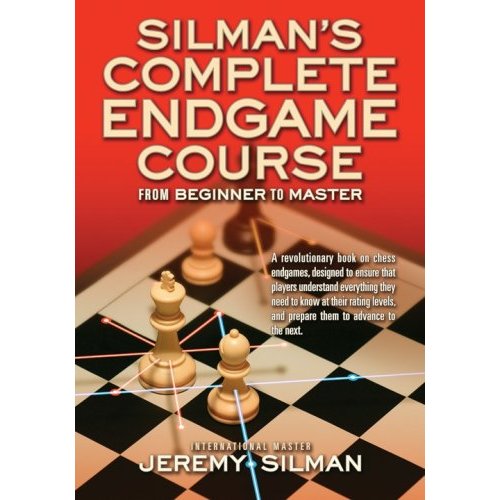
    Silman’s Complete Endgame Course: From Beginner To Master

    Middlegame
    Chess Strategy for Club Players

    Tactics
    Tune Your Chess Tactics Antenna

    General / Training
    Pump Up Your Rating

  • General Treatise on Chess

    General Treatise on Chess

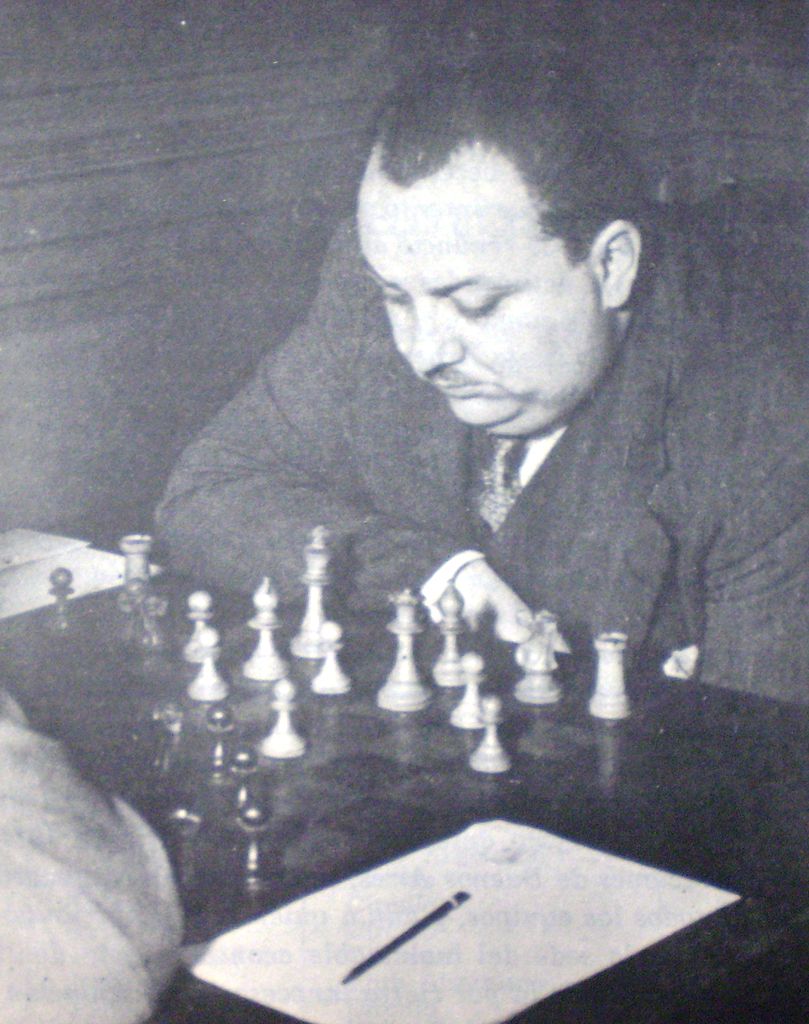
    Recently a Spanish language set of four chess books by the name of el Tratado General de Ajedrez  by Argentinian Chess Master Roberto Grau was recommended to me. The book has been called the Bible of Latin American Chess, and it is highly regarded among Latin American chess players.

    Grau’s work which is composed of 4 volumes, is now out of print and was never translated to any other language. The 4 volumes cover the following themes:

    1. Fundamentals
    2. Tactics
    3. Pawn Structures
    4. Advanced Strategy

    Luckily I read spanish, so I will be using the books as part of my chess study, and I plan on translating and posting about it in future entries.

  • Best Chess Study Books

    I have an extensive chess library, and one of the main problems that I have, is that I move from book to book never finishing any I ever start. So I have decided that I will stick to the following books which are in the 1500-1600 USCF range, and I will not read any that are not on this list.

    The following books are the ones I will use to get me past the Class C category.

    Strategy
    New Ideas in Chess
    Reassess your Chess Workbook

    Tactics
    Art of Attack

    Endgame
    Essential Chess Endings

    Games Collection
    Capablanca Move by Move
    Alekhine’s Best Games

    Online
    ChessTempo
    Chess.com

  • New York 1924

      New York 1924 has gone down in history as one of the most important chess tournaments of all time. Three undisputed world champions including Capablanca and Emanuel Lasker, and a briliantly annotated  by future world champoin Alexander Alekhine. I have made the PGN of all of the games available here.

  • How I am Studying My System

    I have been going over My System for the past few weeks as part of the study strategy portion of my study schedule. I think the best way to go over the content of the book is to go over The Elements section  going over each example carefully. Luckily I have a Chessbase file with all of the diagrams setup which saves me a lot of time. I am annotating the diagrams while reading the book notes. Once I go over The Elements section, I plan on going over it a second time before I begin on Part 2: Positional Play. This will ensure that I have a good understanding of the foundations of Nimzowitsch’s System before I get into the more advanced content. I am also going over the illustrative games whenever Nimzowitsch calls for it.

    In addition, it is helpful to have a copy of Chess Praxis, which has additional illustrative games, as well as a more condensed and modern explanation of key concepts.